
Why Fan Sizing Matters
Choosing the right fan size is critical to achieving optimal air movement. Undersized fans won’t circulate enough air, while oversized systems may consume excess power or disrupt air balance. For safe, efficient airflow, you need to calculate your requirements based on your space, layout, and use case.
At Fan Movement, we help commercial and industrial clients throughout South Africa choose properly sized fan systems using tested ventilation standards.
Step 1: Determine Room Volume
Multiply the space’s length, width, and height to calculate cubic metres.
Example:
20 m (L) × 10 m (W) × 3 m (H) = 600 m³
This is the total volume of air the fan must move.
Step 2: Identify Air Changes Per Hour (ACH)
Each space type has a recommended ACH, which defines how many times air should be replaced every hour.
| Area Type | Recommended ACH |
| Office | 4 – 6 |
| Workshop | 10 – 15 |
| Warehouse | 6 – 10 |
| Kitchen | 15 – 30 |
| Gym or Locker Room | 12 – 20 |
Multiply your volume by the ACH to determine hourly airflow needs.
Example:
600 m³ × 10 ACH = 6,000 m³/h
Step 3: Match with the Right Fan Output
Choose a fan model that meets or exceeds the airflow requirement (in m³/h or CFM), taking into account:
- Duct losses
• Resistance from filters
• Location restrictions
• Number of vents or zones
For long duct runs or pressurized rooms, inline or centrifugal fans may be necessary.
Types of Fans by Airflow Needs
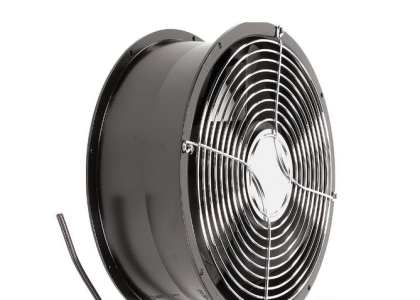
- Axial fans – for high-volume, low-resistance airflow
• Inline duct fans – for distributed, ducted systems
• Centrifugal blowers – for pressure-heavy or multi-zone facilities
• Wall or pedestal fans – for open environments with circulation goals
FAN MOVEMENT – Fan Selection Made Simple
Need help calculating your airflow needs? Our team will assist with accurate sizing, pressure ratings, and fan recommendations to suit your layout and goals. We also offer site visits, installation advice, and product warranties.
“Right size. Right system. Right results.”